
How to Plan a Long-Distance Move: A Step-by-Step Guide
· New Moves Removals · Moving Tips
A move across the county is a different job to a move across the country, even if the boxes look the same. Distance changes how quotes are worked out, how much lead time you need, what happens if your dates don't quite align, and how much thought goes into the journey itself rather than just the packing. Treat a long-distance move like a bigger version of a local one and you'll usually find the gaps on moving day, not before it.
Here's how to plan a long-distance move properly, step by step.
Step 1: Research Your New Area Before You Commit to a Date
Schools, commuting routes, GP registration catchments and local amenities are all harder to course-correct once you've moved than before. If you can, visit before moving day rather than relying entirely on online research — a short visit tells you far more about day-to-day practicalities than listings and maps ever will.
Step 2: Get Quotes Based on an Accurate Survey, Not a Phone Estimate
Long-distance pricing is far more sensitive to accurate volume than a short local move, since both time and fuel scale with distance. A proper survey — in person or via video — gives a far more reliable quote than a rough guess over the phone, and avoids an unpleasant surprise if the van turns out to be too small on the day.
Step 3: Decide What Travels With You, Not the Van
On a long-distance move, the gap between "packed on the van" and "able to get to it" can be a full day or more. Medication, chargers, a change of clothes, important documents and anything irreplaceable should travel with you personally, not buried at the back of a van you won't see again until the other end.
Step 4: Ask About Furniture Dismantling and Reassembly
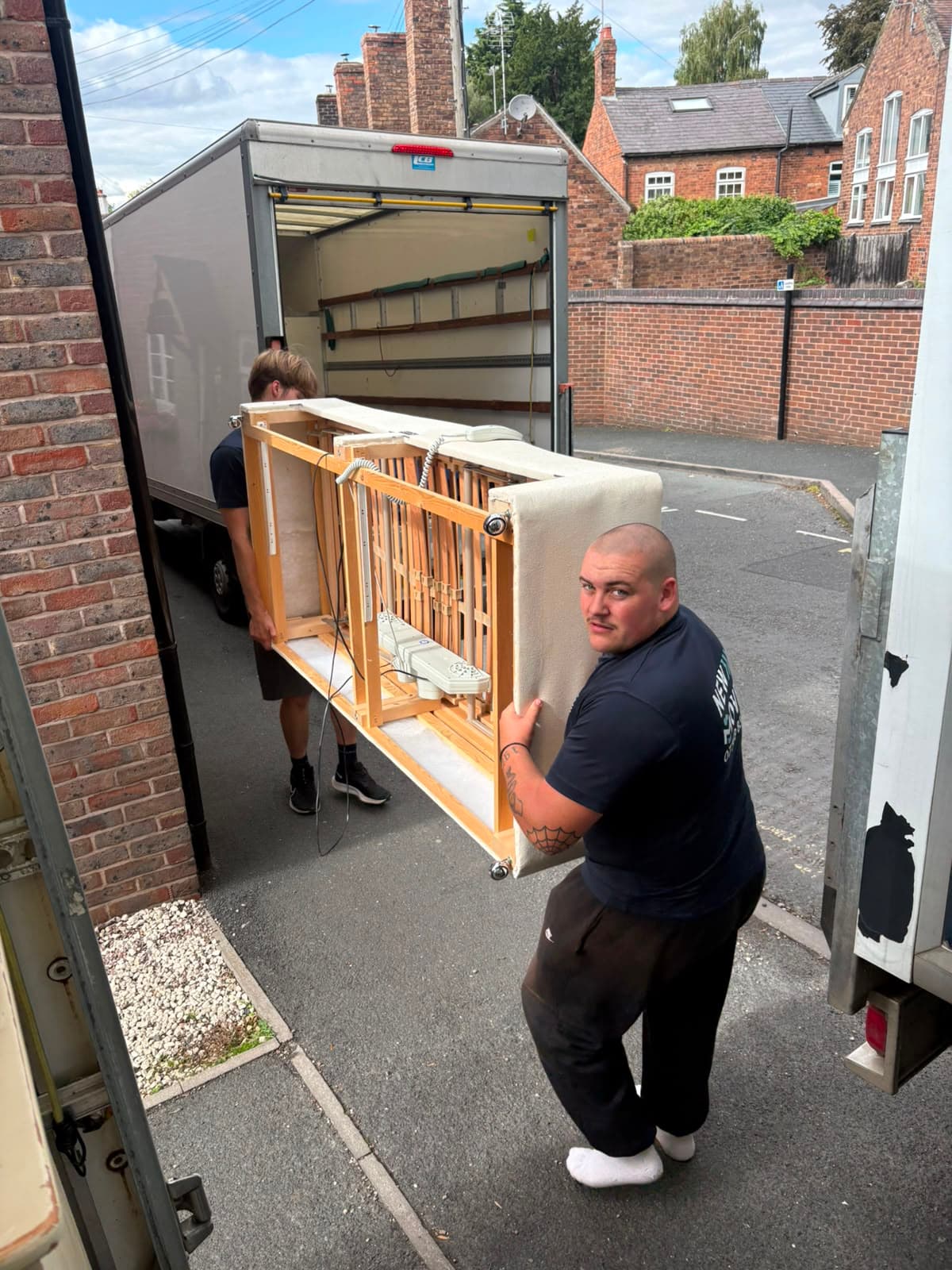
Large furniture travelling a long distance benefits from being dismantled properly rather than wedged in as-is — less movement in transit means less risk of damage over a longer journey, and reassembly at the other end means you're not left with a flat-pack puzzle on arrival. Most removal companies, including New Moves, offer this as standard on full house removals.
Step 5: Consider Storage If Your Dates Don't Line Up
The longer the distance, the more likely a property chain has a gap somewhere in it. Rather than forcing a same-day move that doesn't quite work, storage lets you move out on schedule even if you can't move straight into the new property, with your belongings only handled once if it's arranged through your removals company rather than separately.
Step 6: Transfer Services and Update Your Address Early
The further you're moving, the more worth doing this well ahead of time rather than in the last week. Set up mail redirection through Royal Mail, update your driving licence and voter registration via GOV.UK, and register with a new GP as soon as you have a confirmed address. Citizens Advice has a general checklist if you want to make sure nothing's been missed.
Step 7: Plan for the Practicalities of a Long Travel Day
A long-distance move takes longer than you'd estimate by simply dividing distance by average speed — fuel stops, traffic, loading and unloading time, and weather all add up. Ask your removals company how they plan a long day, including realistic arrival times, so you can plan the rest of your day — meals, pets, children — around it rather than guessing.
Step 8: Confirm Insurance Covers the Full Distance and Any Storage
Don't assume cover is identical for a long-distance job as for a short local one — ask specifically, including what's covered if items need to go into storage partway through the move. A reputable company will explain this clearly rather than leaving you to read the small print alone.
Step 9: Book Earlier Than You Would for a Local Move
A long-distance job needs more planning on the removals company's side too — the right size of vehicle, a crew available for a full day or more, and a route that accounts for your specific access points at both ends. Booking well ahead gives everyone the time to plan it properly rather than scrambling.
What Our Customers Say
Mark's review is a good reminder of what good planning actually delivers on the day:
“Laurie and his team provided an excellent service, nothing was too much effort, our belongings were handled with the greatest care and overall the boys made a potentially stressful move into a happy, memorable experience.”
A longer, more complicated move has more that can go wrong — which is exactly why the planning stage matters more, not less.
We offer long-distance house removals from our base in Shropshire and Herefordshire to anywhere in the UK, including packing and storage where needed.
👉 Planning a long-distance move? Get a free, no-obligation quote: www.newmovesremovals.co.uk/quote
Frequently Asked Questions
How much earlier should I book a long-distance removal company?
Earlier than you would for a local move — several weeks at minimum, since a long-distance job needs more planning around vehicle size, crew availability and route.
Is long-distance removals pricing based on distance or volume?
Both. Distance affects time and fuel; volume affects vehicle size and crew needed. An accurate survey gives the most reliable combined estimate.
What happens if my moving dates don't line up across a long distance?
Storage is the usual solution — your belongings are moved out on schedule and held securely until your new property is ready, rather than forcing a rushed same-day handover.
Can a removal company dismantle and reassemble furniture for a long-distance move?
Yes, this is standard for most full removal services and is particularly worthwhile over a longer journey, where loose furniture has more time to shift and risk damage.
What should I keep with me rather than put on the van?
Medication, important documents, chargers, a change of clothes and anything irreplaceable — anything you might need before you're able to unpack properly at the other end.
- Long Distance Removals
- Moving House
- Moving Advice